About Me

Fribourg, Switzerland
This blog presents our findings of our project work on Rock History. We have been researching on different topics. The entries represent the variety of our interests as well as musical taste... so enjoy...

Thursday, February 3, 2011

The Beatles-Part 3: The Break-up

By Annika

During an interview in 1966, Lennon stated that in his opinion, Christianity was dying, and the Beatles were "more popular than Jesus now." This started a huge controversy in America, especially in the "Bible belt" (the South). South African radio banned the Beatles until 1971. Religious and social conservatives, as well as the Ku Klux Klan, criticized Lennon and the Beatles. In a press conference, Lennon said, "if I'd said television was more popular than Jesus, I might have got away with it," but "if you want me to apologize, if that will make you happy, then okay, I'm sorry."

In June 1967, they released Sgt. Pepper's Lonely Hearts Club Band. It is widely regarded as a masterpiece, and Rolling Stone ranked it number one among its "500 Greatest Albums of All Time." On June 25th, they performed their newest song, All You Need is Love, on television. This was the "Summer of Love," and the song was adopted as a "Flower Power" anthem.


Two months later, their manager, Brian Epstein, died. The Beatles were disoriented and worried about the future. On December 26, 1967, the band aired The Magical Mystery Tour film. For this they received their first major negative feedback from the UK press. It was called "blatant rubbish," "a colossal conceit," and "a kind of fantasy morality play about the grossness and warmth and stupidity of the audience."

During recording for a new album, trouble started for the members of the Beatles. Starr quit for a while, so McCartney had to play drums for several tracks. More tension was caused by Lennon's romance with Yoko Ono. Despite the agreement that partners were not to enter the recording studio, Lennon brought her to all their recording sessions. He lost interest in writing with McCartney, and became more and more critical of McCartney's songwriting.

Recording for Let It Be was "a miserable experience" for the Beatles, so McCartney suggested recording another album, Abbey Road.  Before they could start recording in February, they had to agree on the format on the album. Lennon wanted his music and McCartney's music to be on separate sides of the album. The compromise that they were finally able to agree on was to have separately composed songs on the first side and a medley on the second. On August 20, 1969, they finished Abbey Road with the recording of "I Want You (She's So Heavy)." This was the last time that all of the Beatles were in a recording studio together.


On September 20 1969, Lennon told the group he was leaving. In January 1970, the remaining three Beatles recorded Harrison's "I Me Mine" to complete the Let it Be album. On April 10, McCartney publicly announced that he was leaving the band. On December 31 1970, McCartney filed a suit for the dissolution of the Beatles. However, because of legal disputes, it did not take effect until 1975. The "reassuring, geometrically perfect, once apparently ageless family of siblings" that had captured the hearts of millions of fans around the world was over.

Mighty Quinn by Bob Dylan Cover Versions

Dylan originally recorded the song in 1967 under the name Quinn the Eskimo (Mighty Quinn), but didn't release a version. The song was picked up and recorded by the British band Manfred Mann, who released it under the title Mighty Quinn.


           Bob Dylan                                                                    Manfred Mann


  • Manfred Mann 1968
  • Ian and Sylvia 1968
  • Gary Puckett & The Union Gap 1968
  • Fruitgum Company 1968
  • Julie London 1968
  • The Hollies 1969
  • The Beatles 1970
  • Gotthard 1996
  • Phish 1999
  • Grateful Dead 2000
  • Les Fradkin 2006
  • Nena Daconte 2007
  • Cornershop 2009

Gotthard

The success story of Gotthard began in 1990. Founded by Steve Lee (lead singer) and Leo Leoni (guitar).
Gotthard was founded in the beginning of 1990 in Ticino under the name Krak. They changed their name after Chris von Rohr joined them as their producer and co-songwriter and they signed the recording contract with BMG.


Their first album "Gotthard" was released in 1992 and instantly became a great success in switzerland. All the following albums reached  No.1 in the swiss album charts.

The Band was the supporting act of many famous rock bands and singers such as Bon Jovi, ACDC, Deep Purple, Bryan Adams,...

Band Members


  • Steve Lee - Lead Vocals

  • Leo Leoni - 1. Guitar
    • I don't like: Warm beer
    • I like: Ice cold beer
    • Literature: ?????What's that????? 
  • Hena Habegger - Drums
    • Pets: Two cats (Bijou & Simba)
    • Favorite Color: Dollar Green
    • Hobbies: Gardening
  • Freddy Scherer - 2. Guitar
    • Best Place: Next to the barbecue
    • Favorite Clothes: Yes!
    • Weaknesses: Hm????!!!
  • Marc Lynn - Bass Guitar
    • Literature: Asterix
    • Fears: Last call at the bar!
    • Favorite Rockband: Everything that rocks!


For more information Gotthard Official Website  --> The Band


Death of Steve Lee

Singer Steve Lee† (5.8.1963 - 5.10.2010)was on a bike trip in the desert of Nevada with his wife and was involved in a traffic accident on the 5. october 2010 and died. This bike trip has been his dream for a long time.
His last appearance was in the end of september during the Miss Switzerland election and their last concert in front of an audience was at the Open Air Gampel in august.

(For more information http://www.stevelee.ch/ )

Discography


Cover Versions
by Annick, Flavia, Anja

Gotthard Albums


Discography

  • Gotthard

  • Dial Hard

  • G.

  • Defrosted

  • Open

  • Homerun

  • Best of Ballads

  • Human Zoo

  • One Team, One Spirit

  • Lipservice

  • Made in Switzerland

  • Domino Effect

  • Need to Believe

  • Heaven Best of Ballads Vol.II


Bon Jovi - ... 90s ...

By Shelby

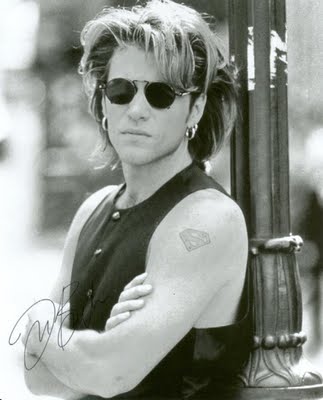
After 18 months of touring the Bon Jovi Band decided to go their separate ways, which led to Bon Jovi's solo album, Blaze of Glory (1990). Then, a year later, they band released its album, Keep the Faith (1992), which ended any break-up rumors circulating about the band. Then Bon Jovi changed his look completely, losing the big 80s hair and going for a newer more up-to-date look.


Then the band released another album, These Days (1995), right before they went on a full-scale world tour. But afterwards the band took a break as Bon Jovi took to acting all through the later part of the 90s. He took his first role in the 1995 film; Moonlight and Valentino. He then went on to play roles in Ed Burns' No Looking Back and the World War II submarine adventure U-571. In 1999, the band regrouped to record "Real Life" for the EdTV soundtrack.

Evolution of house music: The 21st century

By. Fabian Kolly


The 21st century: 2000s


Chicago Mayor Richard M. Daley proclaimed August 10, 2005 to be "House Unity Day" in Chicago, in celebration of the "21st anniversary of house music" (actually the 21st anniversary of the founding of Trax Records). The proclamation recognized Chicago as "the original home of house music" and that the music's original creators "were inspired by the love of their city, with the dream that someday their music would spread a message of peace and unity throughout the world".


It was during this decade that vocal house became firmly established, both in the underground and as part of the pop market, and labels such as Defected, Roule and Om were at the forefront of championing the emerging sound. In the mid-2000s, fusion genres such as electro house, fidget house and tech house emerged. This fusion is apparent in the crossover of musical styles by artists such as Dennis Ferrer and Booka Shade, with the former's production style having evolved from the New York soulful house scene and the latter's roots in techno. DJs today can be heard blending all sub-genres of house as many of the best musical elements are shared across these sub-genres.


During this time, house music became increasingly accessible to mainstream suburban kids who came into major US cities to party at large venues like New York's The Sound factory, Exit and Twilo or Miami's Crobar and Space, causing many underground fans to label the scene as becoming "bridge and tunnel". The growing interest in house music from suburban, predominantly white, middle-class listeners encouraged many DJ/producers to increasingly promote their sound by releasing singles and CD compilations on a large, more commercial scale. As a result, major music warehouses like Tower Records began to carry larger selections of house music, often dedicating sections of their stores solely to dance music. As Napster and other internet downloading sites became more popular in the late 1990s and into the new millennium, house music gained an even broader audience as members shared new mixes of popular club tracks.


Today, innovative house music is celebrated and showcased at the Burning Man festival and at major industry sponsored events like Miami's Winter Music Conference.


As of the late 2000s, house influenced music retains widespread popularity in clubs throughout the world. House Music has also seen a comeback into the mainstream with producers like Deadmau5, Justice, Sickindividuals, Fedde Le Grand, and Benny Benassi bringing lighter, more diluted, eurodance-infused house tracks back to the US Top 40 charts. With this steady, yet subtle, mainstream success throughout the years, House has gained momentum and concepts developed by House producers have infected the mainstream pop and hip-hop worlds. With the introduction of Vocoders and Auto-Tune, as well as the popularization of digital audio workstations and new production techniques like sidechaining and heavy compression, House is becoming more and more a part of American musical culture. 


Australian House became popular in the mid-2000s, acts like The Aston Shuffle, Tommy Trash, Bag Raiders and Empire of the Sun became well-known domestically.


Evolution of house music: Early 1980s - Late 1990s

By: Fabian Kolly

Chicago : Early 1980s – late 1980s

In the early 1980s, Chicago club & radio DJs were playing various styles of dance music, including older disco records, newer Italo Disco, hip hop and electro funk tracks, as well as electronic pop music by Kraftwerk, and recent danceable R&B productions in the genre now known as boogie. Some made and played their own edits of their favorite songs on reel-to-reel tape, and sometimes mixed in effects, drum machines, and other rhythmic electronic instrumentation.
One house tune called "Move Your Body" by Marshall Jefferson made house music known outside of Chicago and was called "the house music anthem" by many, and was featured in the 2005 video game "Grand Theft Auto: San Andreas" on the ingame radio station "SF-UR".


Detroit : early 1980s – late 1980s


Detroit techno was developed in the mid 1980s, although Detroit techno is a distinct musical form in its own right, its pioneers were also instrumental in forwarding house music internationally. The two forms of music developed together from 1985 to 1990 and still are genres that often coincide.
Detroit techno developed as the legendary disc jockey The Electrifying Mojo conducted his own radio program at this time, influencing the fusion of eclectic sounds into the signature Detroit techno sound. This sound, heavily influenced by European Electronica (Kraftwerk, Art of Noise), early B-boy Hip-Hop (Man Parrish, Soul Sonic Force) and Italo Disco (Doctor's Cat, Ris, Klein M.B.O.), was further pioneered by Juan Atkins, Derrick May, and Kevin Saunderson the "godfathers" of Detroit Techno.


UK: mid 1980s – early 1990s

Early British house music quickly set itself apart from the original Chicago house sound; many of the early hits were based on sample montage, rap was often used for vocals (far more than in the US), and humour was frequently an important element.
The house scene in cities such as Birmingham, Sheffield, Manchester and London were also provided with many underground Pirate Radio stations and DJs alike which helped bolster an already contagious, but otherwise ignored by the mainstream, music genre. The earliest and influential UK house and techno record labels such as Warp Records and Network Records (otherwise known as Kool Kat records) helped introduce American and later Italian dance music to Britain as well as promoting select UK dance music acts.
But house was also developing on Ibiza, although no house artists or labels were coming from this tiny island at the time. In the 1970s Ibiza was a stop-over for the rich party crowd. By the mid-1980s a distinct Balearic mix of house was discernible. Several clubs like Amnesia with DJ Alfredo were playing a mix of rock, pop, disco and house. These clubs, fueled by their distinctive sound and Ecstasy, began to have an influence on the British scene. By late 1987, DJs like Paul Oakenfold and Danny Rampling were bringing the Ibiza sound to UK clubs like the Hacienda in Manchester, and in London clubs such as Shoom in Southwark, Heaven, Future and Spectrum.


US: late 1980s – early 1990s

Back in America the scene had still not progressed beyond a small number of clubs in Chicago, Detroit, New York, and New Jersey. Paradise Garage in New York City was still a top club, although they now had Todd Terry, his cover of Class Action's Larry Levan mixed "Weekend" demonstrated the continuum from the underground disco to a new house sound with hip-hop influences evident in the quicker sampling and the more rugged bass-line. While hip-hop had made it onto radio play-lists, the only other choices were Rock, Country & Western or R&B.
Other influences from New York came from the hip-hop, reggae, and Latin community, and many of the New York City super producers/DJs began surfacing for the first time (Erick Morillo, Roger Sanchez, Junior Vasquez, Danny Tenaglia, Jonathan Peters, David Morales) with unique sounds that would evolve into other genres (tribal house, progressive house, funky house).


Late 1980s - 1990s

In Britain, further experiments in the genre boosted its appeal. House and rave clubs like Lakota, Cream emerged across Britain, hosting house and dance scene events.
At the same time, a new indie dance scene emerged. In New York, bands such as Deee-Lite furthered house's international influence.
In England, one of the few licensed venues The Eclipse attracted people from up and down the country as it was open until the early hours.
The music continued to grow and change, as typified by Leftfield with "Release the Pressure", which introduced dub and reggae into the house sound, although Leftfield had prior releases, such as "Not forgotten" released in 1990 on Sheffield's Outer Rhythm records.
A new generation of clubs like, Liverpool's Cream and the Ministry of Sound were opened to provide a venue for more commercial sounds. Major record companies began to open "superclubs" promoting their own acts. These superclubs entered into sponsorship deals initially with fast food, soft drinks, and clothing companies. Flyers in clubs in Ibiza often sported many corporate logos. A new sub-genre, Chicago Hard House, was developed by DJs such as Bad Boy Bill, DJ Lynnwood, DJ Irene, Richard "Humpty" Vission and DJ Enrie, mixing elements of Chicago House, Funky House and Hard House together.
Towards the end of the 1990s and into the 2000s, producers like Daft Punk, Cassius (Band) ST. Germain and DJ Falcon began producing a new sound out of Paris's house scene. Together, they laid the groundwork for what would be known as the French House movement. By combining the harder-edged-yet-soulful philosophy of Chicago House with the melodies of obscure Funk & Disco music from the 1970s, state-of-the-art production techniques and the sound of analog synthesizers, they began to create the standards that would shape practically all House music that was created after it.